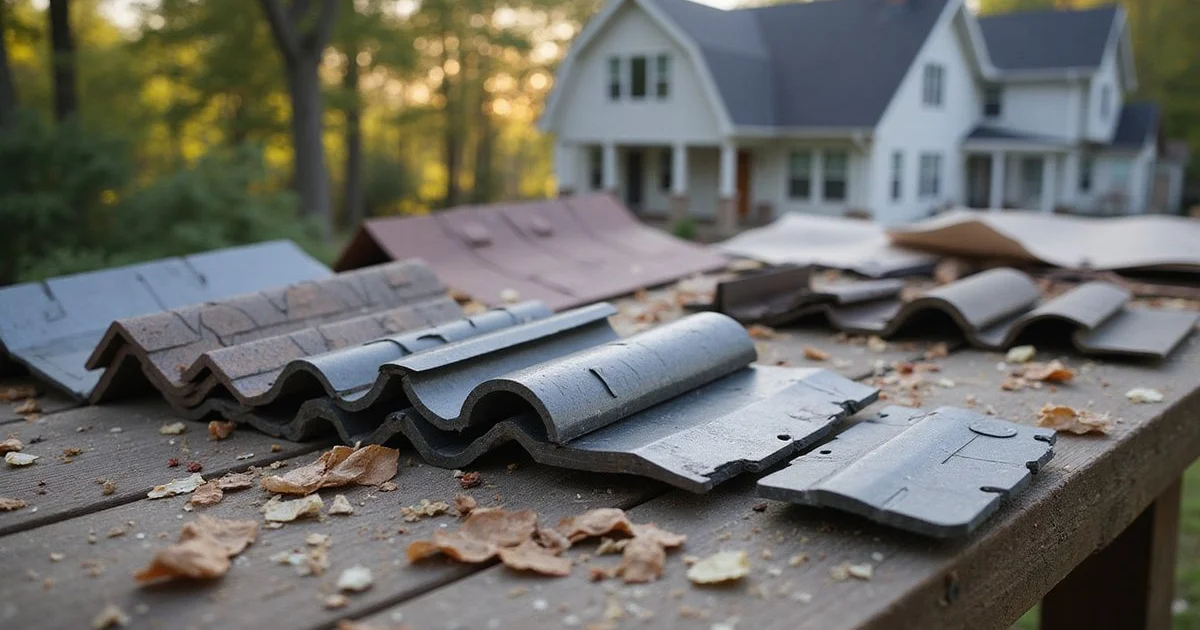
The harsh reality of homeownership in Lancaster is that your roof is the only thing standing between your living room and Ohio’s unpredictable weather. From the heavy snow loads we saw last winter to the severe thunderstorms that rolled through Fairfield County in the spring of 2025, your home’s exterior takes a beating that most people don’t think about until water starts dripping on the floor. From what I’ve seen in this industry, the most expensive repairs aren’t caused by the storm itself, but by the months of silent deterioration that follow it.
Knowing the subtle difference between a roof that just looks old and one that is actively failing is the key to avoiding a five-figure emergency.
In this guide, we are going to break down the seven verifiable signs of failure, the specific costs associated with them in 2026, and the practical steps you need to take to protect your investment.
1. Your Roof Is Over 20 Years Old
Most homeowners believe a “30-year warranty” means they can ignore their roof for three decades.
The truth is that in Ohio’s climate, the average lifespan of a standard 3-tab asphalt shingle roof is closer to 15 or 20 years. Constant expansion and contraction from our freeze-thaw cycles cause the asphalt to become brittle much faster than it would in a milder region. Once your roof passes that 20-year mark, the adhesive seals that bond the shingles together often lose their grip, leaving them susceptible to wind lift.
If you are budgeting for a replacement in 2026, you should know that the average cost for a full roof replacement in Ohio now ranges between $8,500 and $15,000 for a standard home. Waiting until the roof actively fails can increase this cost significantly due to underlying wood rot. We recommend checking your installation records immediately; if that date was before 2006, you are operating on borrowed time.
2. Curling or Buckling Shingles
Take a pair of binoculars and look at the slopes of your roof receiving the most direct sunlight.
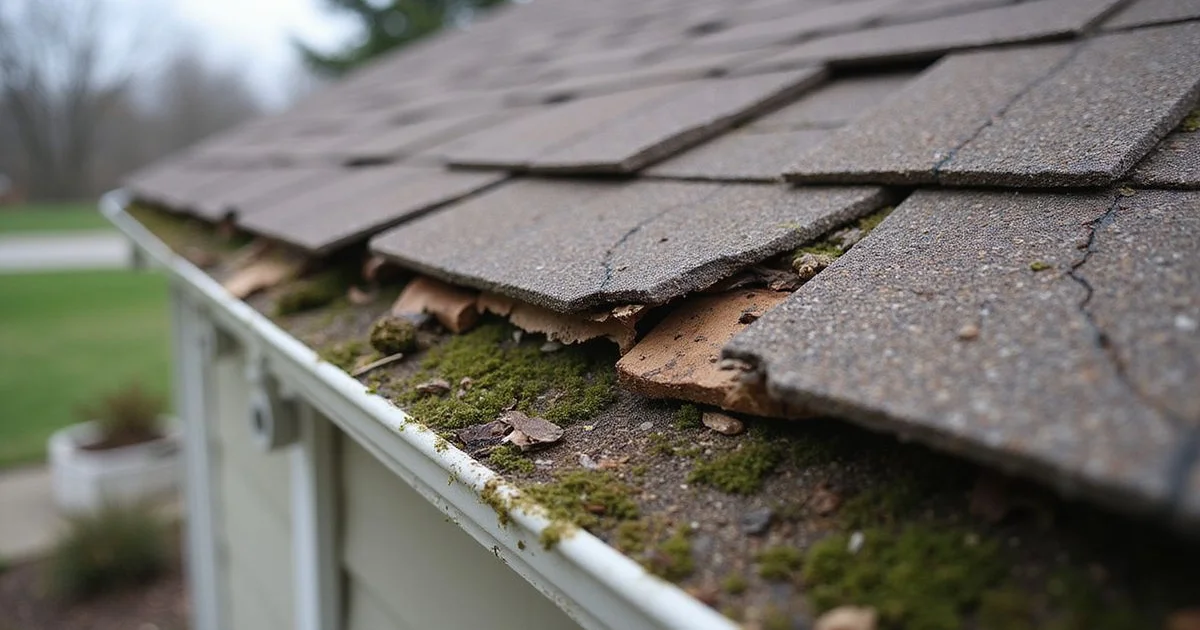
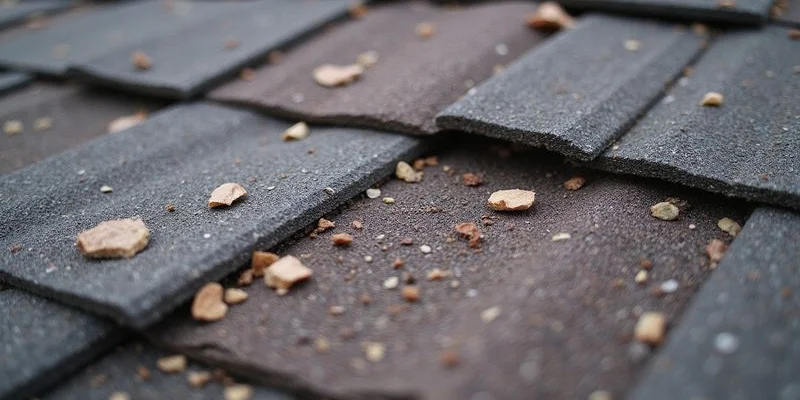
Shingles that are curling at the edges or “cupping” in the center have lost their essential oils and are no longer sealing properly. This is not just a cosmetic issue; it is a mechanical failure of the roof system. In Fairfield County, where wind gusts frequently exceed 60 mph during spring storms, a curled shingle acts like a sail that catches the wind and can rip away entirely.
We often see this caused by poor attic ventilation trapping heat and baking the shingles from the underside.
The “Claw” Test:
- Cupping: The center of the shingle sinks while edges turn up. This is usually age-related.
- Clawing: The middle comes up while edges stay flat. This often points to heat damage from inside the attic.
3. Missing Shingles and the “Zipper” Effect
After any storm with high winds, you should walk the perimeter of your home to look for debris.
Finding a single shingle in your yard might seem minor, but it often indicates that the sealant strip on your roof has failed. Professional roofers call this the “zipper effect” because once one shingle blows off, the wind has a way to get underneath the surrounding ones, peeling them off in a chain reaction during the next gust. A missing shingle exposes the black underlayment or, worse, the bare wood deck to rain and UV rays.
Modern high-performance shingles, like the Owens Corning Duration series popular in our region, utilize a reinforced fabric nailing strip to prevent this, but older standard shingles lack this protection. If you see this pattern, your roof’s wind resistance is likely compromised.
4. Granules in Your Gutters
Asphalt shingles are covered in ceramic-coated granules that serve as their sunscreen and armor.
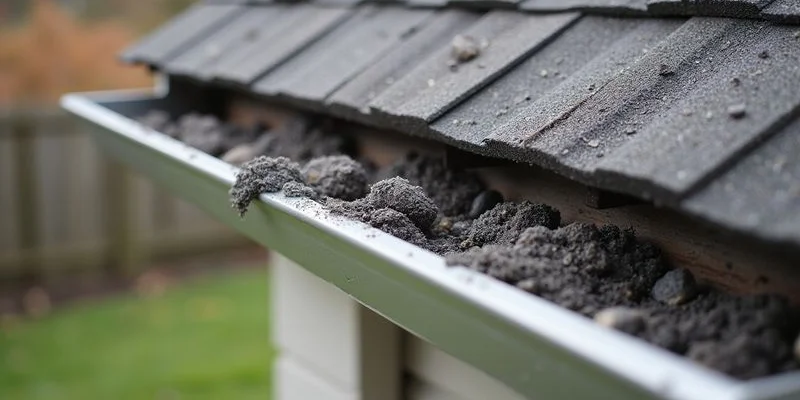
These granules block UV rays that would otherwise melt the asphalt and degrade the waterproof layer. It is normal for a new roof to shed a few loose granules, but if you are scooping handfuls of sand-like material out of your gutters on an older roof, it is a red flag. A good rule of thumb is that if you find more than an inch of accumulation in the bottom of your downspouts after a heavy rain, your shingles are rapidly shedding their protective coating.
Why This Matters:
| Sign | What It Means | Action Required |
|---|---|---|
| Uniform Sand in Gutter | General aging of the roof. | Schedule an inspection within 3-6 months. |
| Black Spots on Shingles | Granules have fully worn away, exposing asphalt. | Immediate replacement needed to prevent leaks. |
| Granules on Ground | Washout from heavy rain is stripping the roof. | Check downspouts for blockages. |
5. Sagging Roof Deck
This is the one warning sign that requires an immediate call to a professional.
A roofline that appears to dip, curve, or sag is a structural emergency indicating that the decking (the plywood or planks beneath the shingles) has rotted or fractured. In Fairfield County, the Residential Code of Ohio requires roofs to withstand a snow load of 20 pounds per square foot, which is roughly equivalent to 14 inches of fresh snow. If moisture from ice dams or leaks has softened the wood, it can no longer support that weight.
We find that ice dams are the most common culprit here. When snow melts on the upper roof and refreezes at the eaves, it forces water backward under the shingles and into the wood deck. Ignoring a sagging roof places your home at risk of collapse during the next heavy snowfall.
6. Daylight Visible Through the Attic
Head up to your attic on a bright, sunny afternoon and turn off the lights.
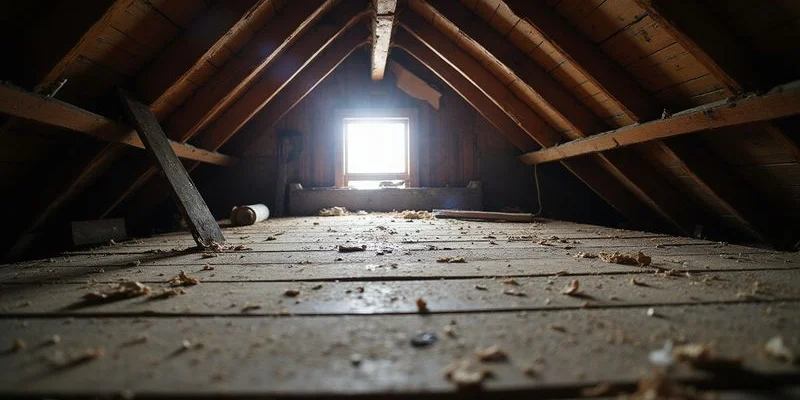
If you can see pinpoints of light shooting through the roof boards, you have active entry points for water, insects, and rodents. This usually happens because the decking has shifted or the flashing around chimneys and vents has rusted away. While you are there, inspect the underside of the wood for dark water stains, which are evidence of slow leaks that haven’t yet reached your ceiling.
Proper ventilation is critical here. Ohio building codes generally follow the 1:150 rule, meaning you need 1 square foot of ventilation for every 150 square feet of attic space. If your attic feels like an oven or smells musty, poor ventilation likely caused the decking to warp and open those gaps.
7. Rising Energy Bills
Your roof is a primary component of your home’s thermal envelope.
If you notice your heating bills spiking in winter or your AC running constantly in summer, your roof might be allowing conditioned air to escape. Wet insulation loses its R-value (thermal resistance) almost immediately, meaning a small leak you can’t see acts like an open window in your attic. The Department of Energy estimates that proper attic insulation and a sealed roof can save homeowners up to 15% on heating and cooling costs.
We also encourage homeowners to look into the Inflation Reduction Act (IRA) tax credits. If you replace your roof and upgrade your insulation or ventilation at the same time, you may qualify for a tax credit of up to $1,200 for the energy-efficiency improvements.
What to Do If You Spot These Signs
Finding one of these signs is stressful, but acting quickly gives you options that procrastination takes away.
Most insurance policies in Ohio have a strict statute of limitations on storm damage claims, often limiting you to just one year from the date of the weather event to file. If you wait too long to document the damage, you could be left paying the full replacement cost out of pocket.
Here is the action plan we recommend:
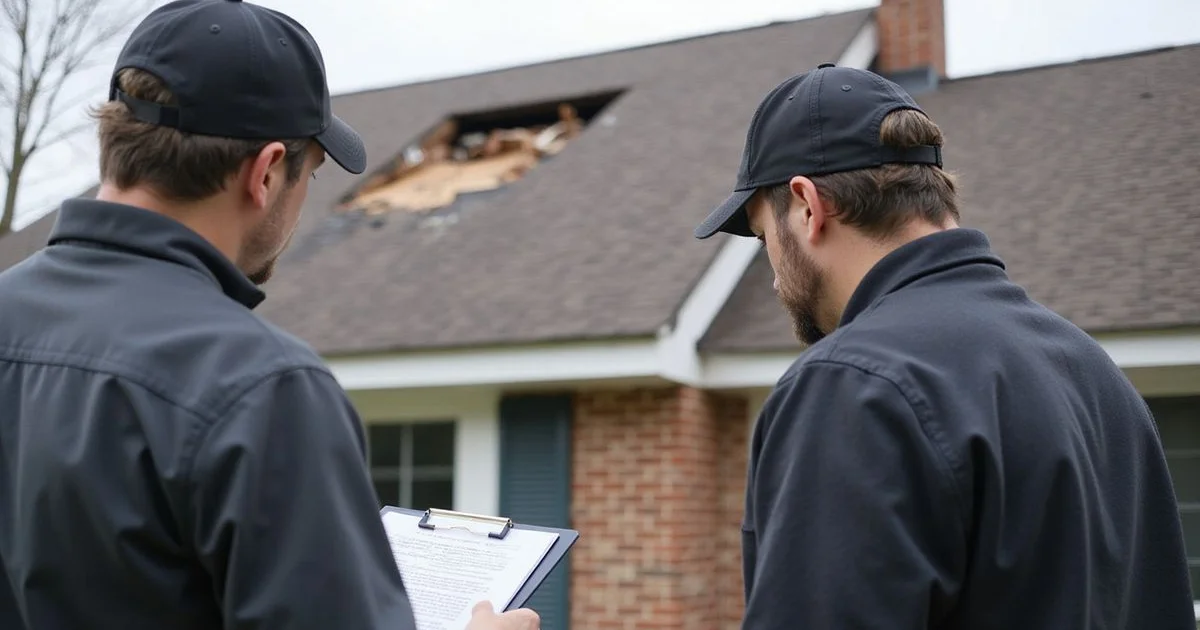
- Schedule a professional inspection: Do not rely on a handyman; get a licensed roofer who understands Ohio code requirements. Contact us for a free inspection.
- Document everything: Take clear photos of the damage from the ground and any granules in your gutters.
- Get a written estimate: Ensure the quote includes specific line items for tear-off, disposal, and ice guard installation.
- Check your insurance: Review your policy for “wind and hail” deductibles and time limits on filing claims.
Protect Your Home Before It Is Too Late
At Fairfield Peak Roofing, we provide free roof inspections for homeowners throughout Lancaster and Fairfield County.
Our team knows exactly what local storm damage looks like and how to document it for insurance carriers. We believe in transparency and will walk you through the photos of your roof so you can see exactly what we see. You will never be pressured into a full replacement if a repair can extend your roof’s life safely.
If you have spotted any of these warning signs, or if your roof is simply nearing that 20-year mark, reach out to us today. Protecting your home now is always cheaper than repairing water damage later.
Need Help with Your Roof?
Get a free inspection and estimate from Lancaster's most trusted roofing team.